
Dunkin’ Donuts: ‘The Center’
A web platform to improve the Dunkin’ Brands franchisee and crew member in-store experience. Modernizing how information moves between corporate and franchisees, how crew members are trained, and how in-store operations are standardized.
As a franchisee-based company, DBI struggled with streamlining and standardizing communication and information across all their 10,000+ restaurants.
Dunkin’ Brands (DBI) hired Merkle to find a solution to help them improve the flow of information from their corporate team throughout their franchisee community. Their franchise model creates a unique set of challenges when trying to standardize information across all the separate franchisee-owned businesses.
DBI was very familiar with the problem but they were not sure exactly how to solve it; so we first began with a robust discovery phase before designing a solution to improve the experience.
Project overview
Client
Dunkin’ Brands (DBI)
Lead UX Designer
I collaborated with the research team to execute an ethnographic study of Dunkin’ and Baskin-Robbins restaurants around the country to better understand their current state challenges and how the Dunkin’ corporate team could use a digital platform to resolve issues faced by the franchisee community.
I also lead the design and strategy work for ‘The Center’ collaborating closely with client partners, architects, project managers, researchers, and UI designers.
My role
UX designer
UI designer
Brand research
Business Analysts
Project Managers
Client Partners
Architects
Developers
Teams involved
March 2020 - August 2021
Project timeline

What we did.
Step 1: Discovery
Stakeholder and subject matter expert (SME) Interviews
We kicked off this project with a pretty extensive discovery phase. We were asked to conduct on-the-ground research at restaurants around the country to determine what this franchisee community truly needed and how best the corporate team could improve their experiences via a digital platform.
However, this project kicked off in March 2020 and due to COVID-19 we had to pivot our research strategy last minute to virtual interviews. Over the course of a few months, we spoke with 150+ individuals who were either directly involved in the success of the project or who will be the users of the product (The Center). We spoke with key stakeholders, corporate team members, franchise owners, field representatives, restaurant managers, and team members at both Dunkin’ and Baskin Robbins locations nationwide.
A diagram showing the DBI structure.
Key Findings
Many of our interview findings challenged our client’s assumptions and some of the business goals with this project; in the end, this led us to review our approach and make strategic modifications to more closely align our project objectives with our users.
Step 2: Synthesis
After hours of research and discovery, we began to synthesize our findings into a concise project vision.
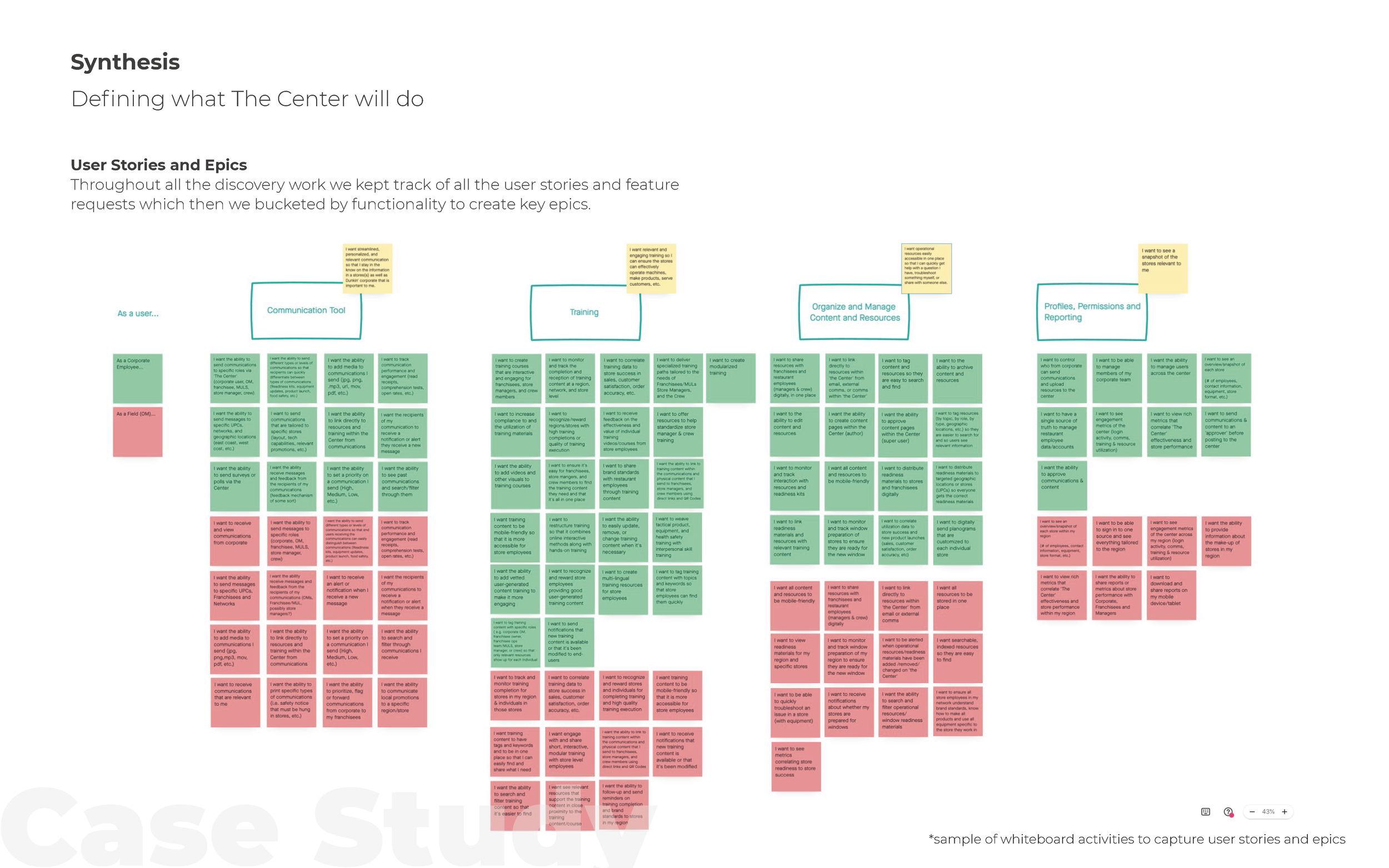
We defined our key user personas, we nailed down our ‘North Star’ which became our guiding principle for the project, and we defined our strategic pillars. We also formalized the user stories and epics for the center, defining what exactly we were going to be able to build.
Our North Star
Create a digital, mobile-friendly, intuitive hub that provides franchisees and their employees with the information they need to do their jobs more efficiently, effectively, and enjoyably. All while giving franchisees and Dunkin' corporate real-time insights into how stores are performing.
Key Personas
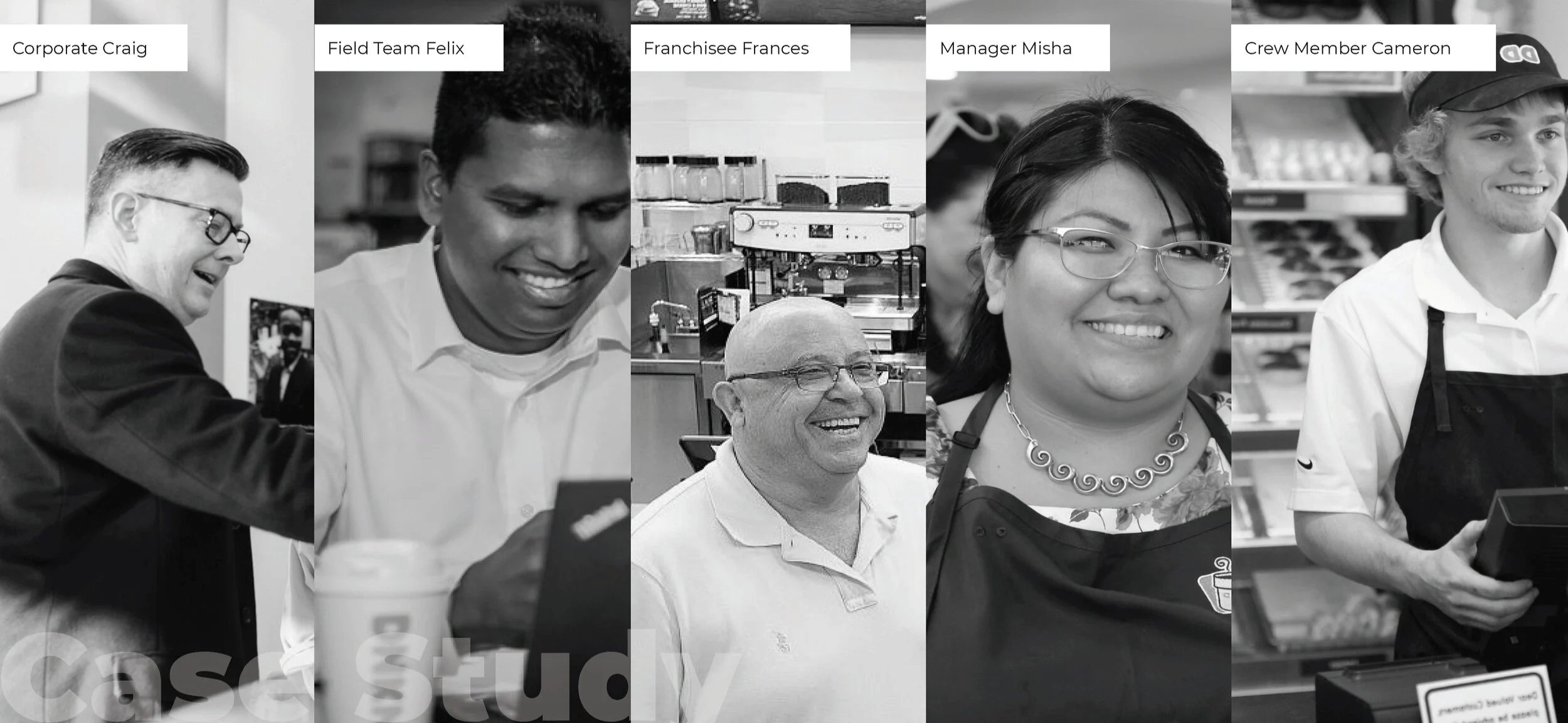
After a long discovery process, we began to summarize our findings. First, we focused on our primary end-users and created 5 personas.
-
Corporate Users will use the platform primarily as authors, but will also use the platform to ensure all departments have visibility into what the franchisees see
-
Field team users support the franchisees out in the field. These corporate employees are often seen as the go-between between corporate initiatives and restaurant realities. These users will access the portal to help transmit information.
-
Franchisees are a critical user base as they directly affect the behaviors and tool utilization of all users ‘lower’ in the hierarchy than they are.
-
Restaurant Managers are the glue that holds a restaurant together. They deal with all the day-to-day store operations along with all of the corporate requirements, like keeping employees up to date on skills and prepping the stores for new products.
-
Team Members are on the ground, selling and making products. These individuals have a difficult job and our goal was to ensure that any solution was focused on improving their day-to-day jobs.
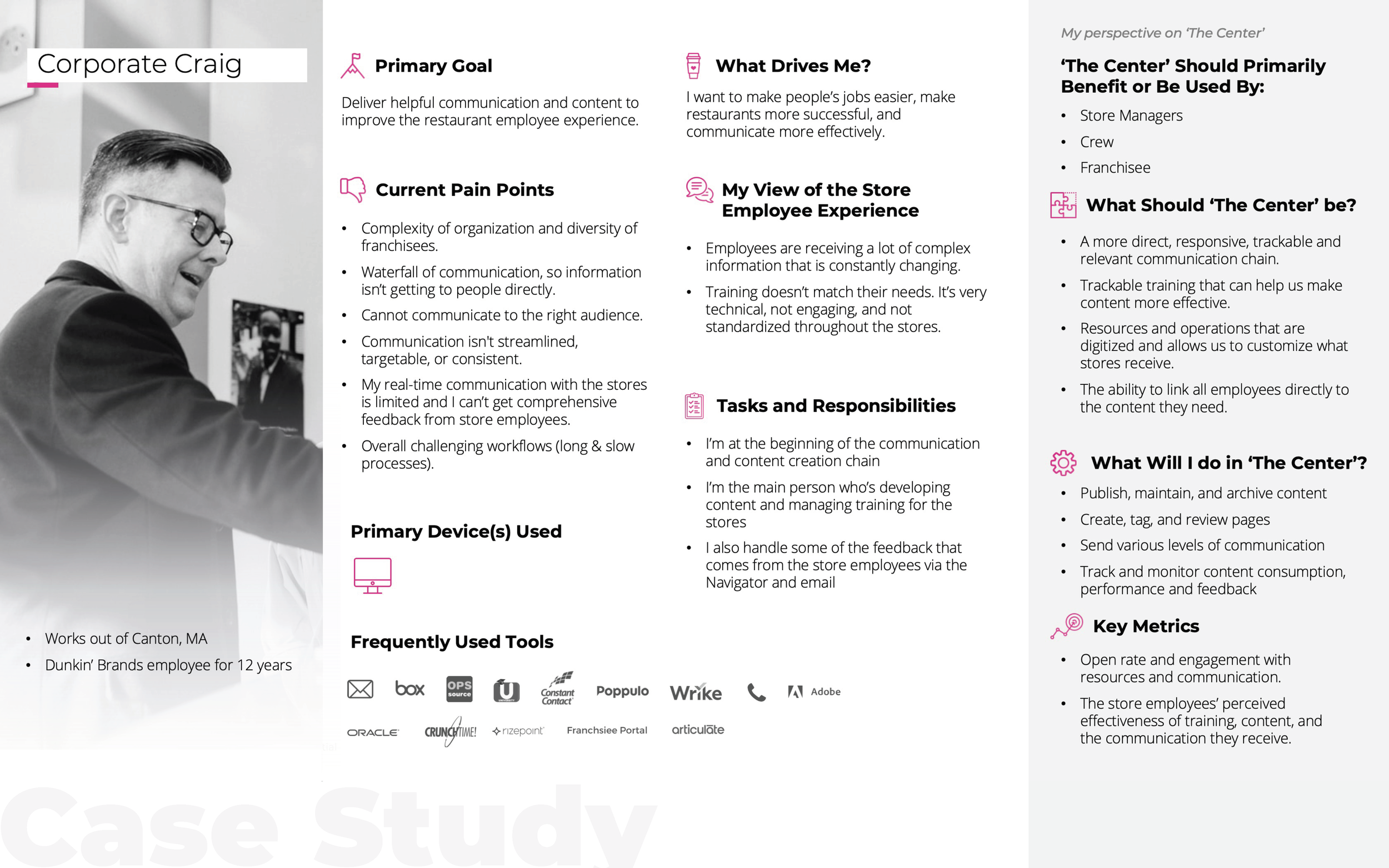
We spent a lot of time in the synthesis phase really nailing down what features would be available at what release based on expected impact and lift. This way, as we transitioned into our design phase we had a solid understanding of what and how we were building, so we could focus on building a meaningful MVP.
Defining user stories & epics
Step 3: Create
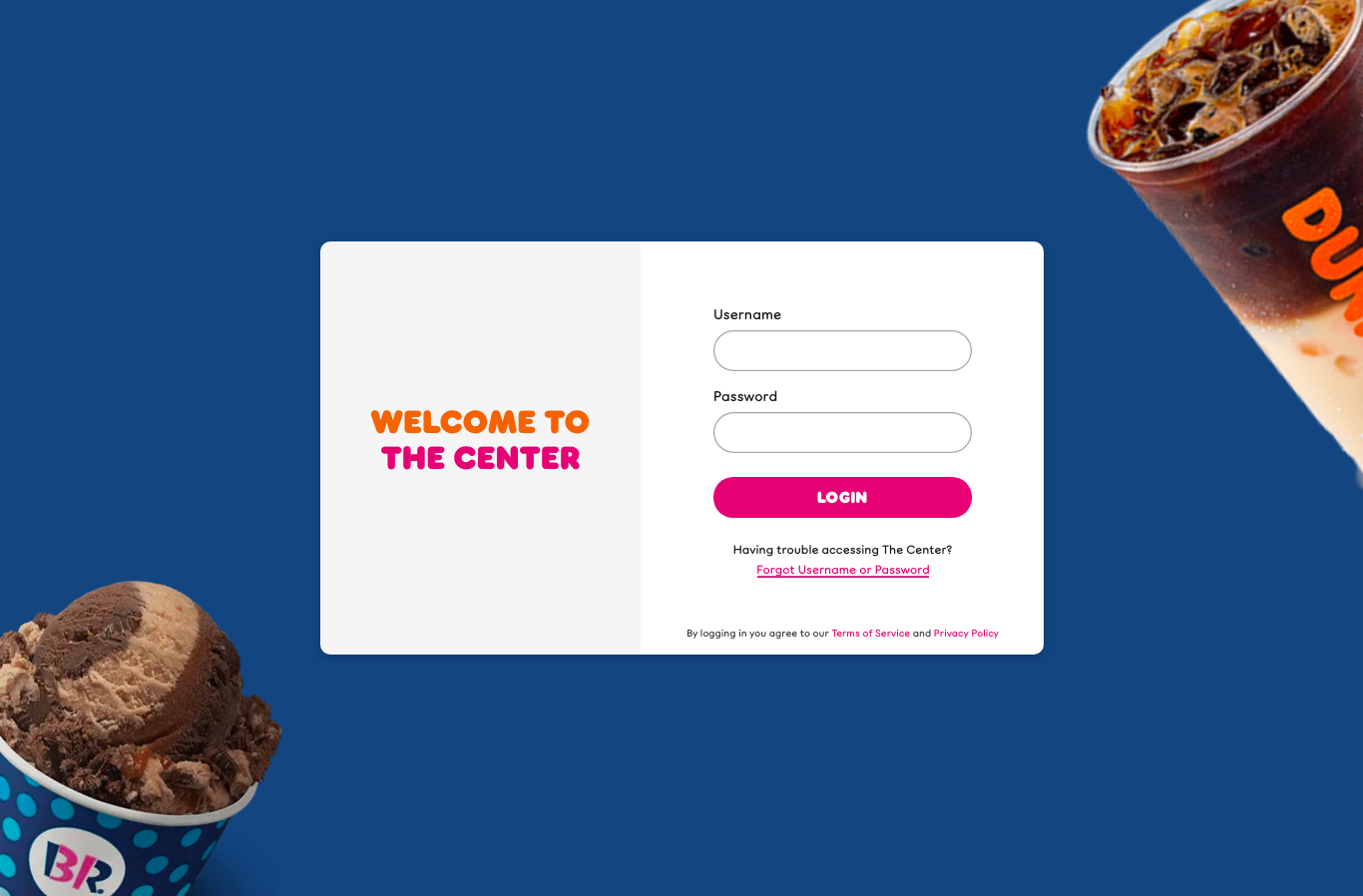
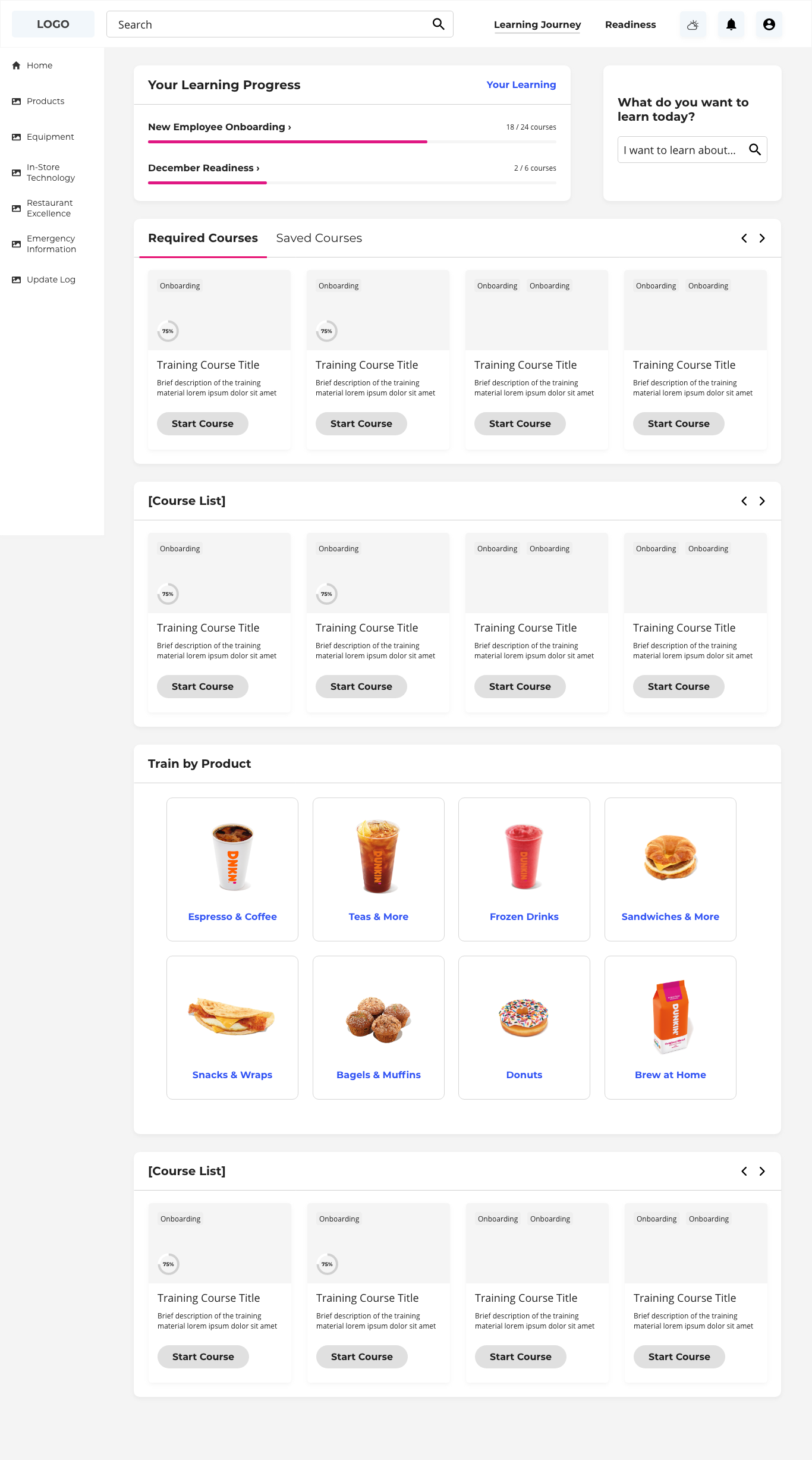
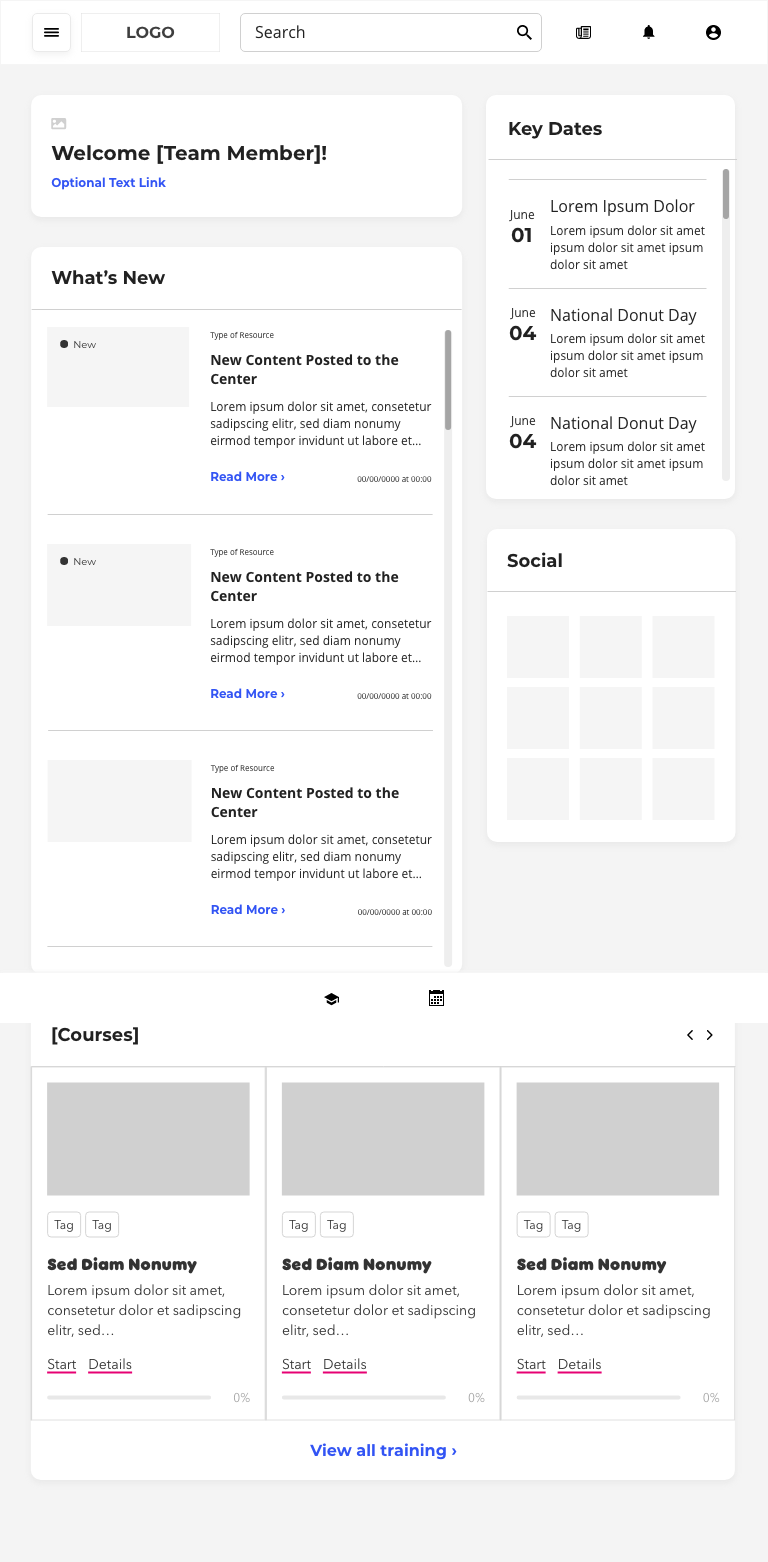
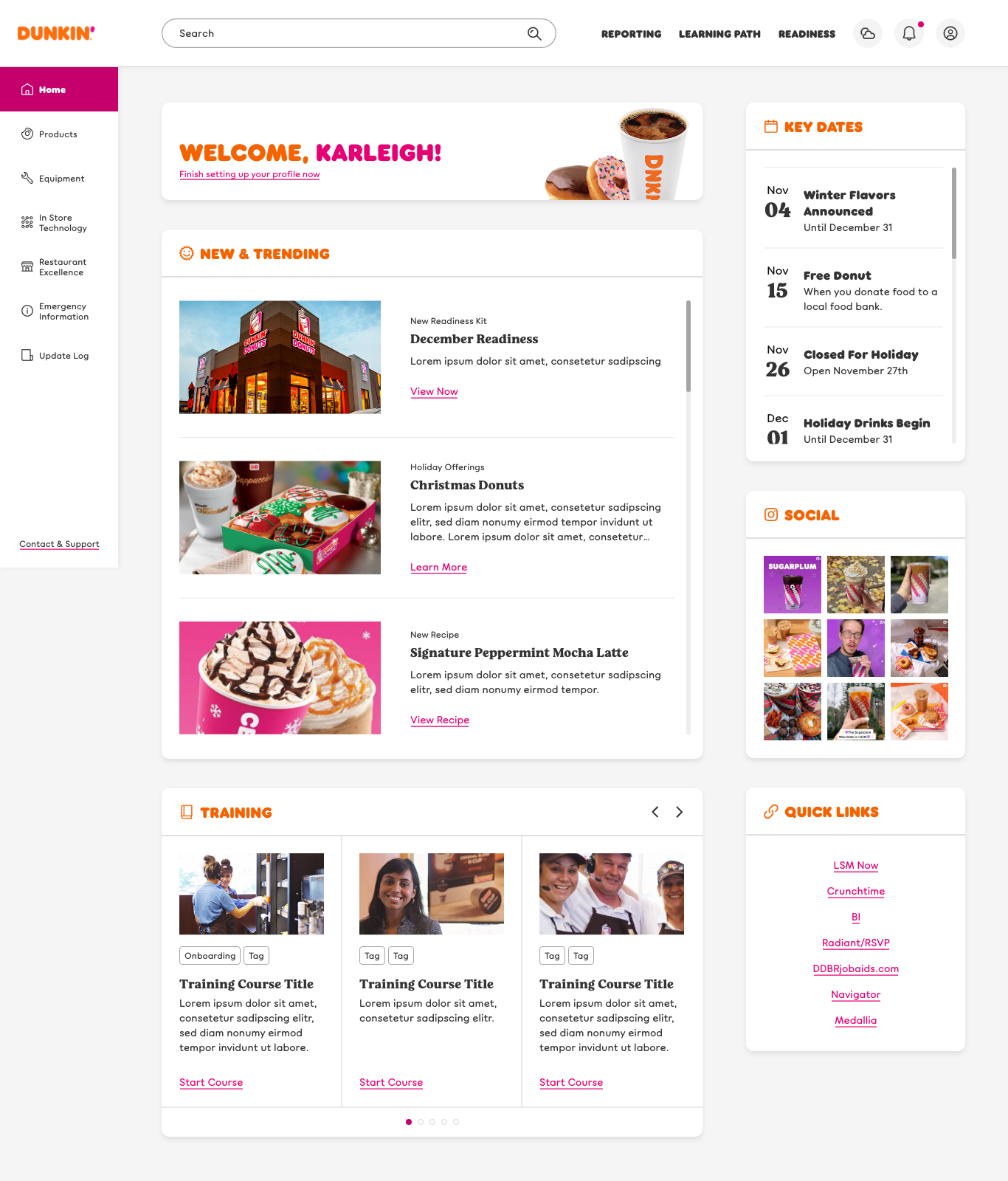
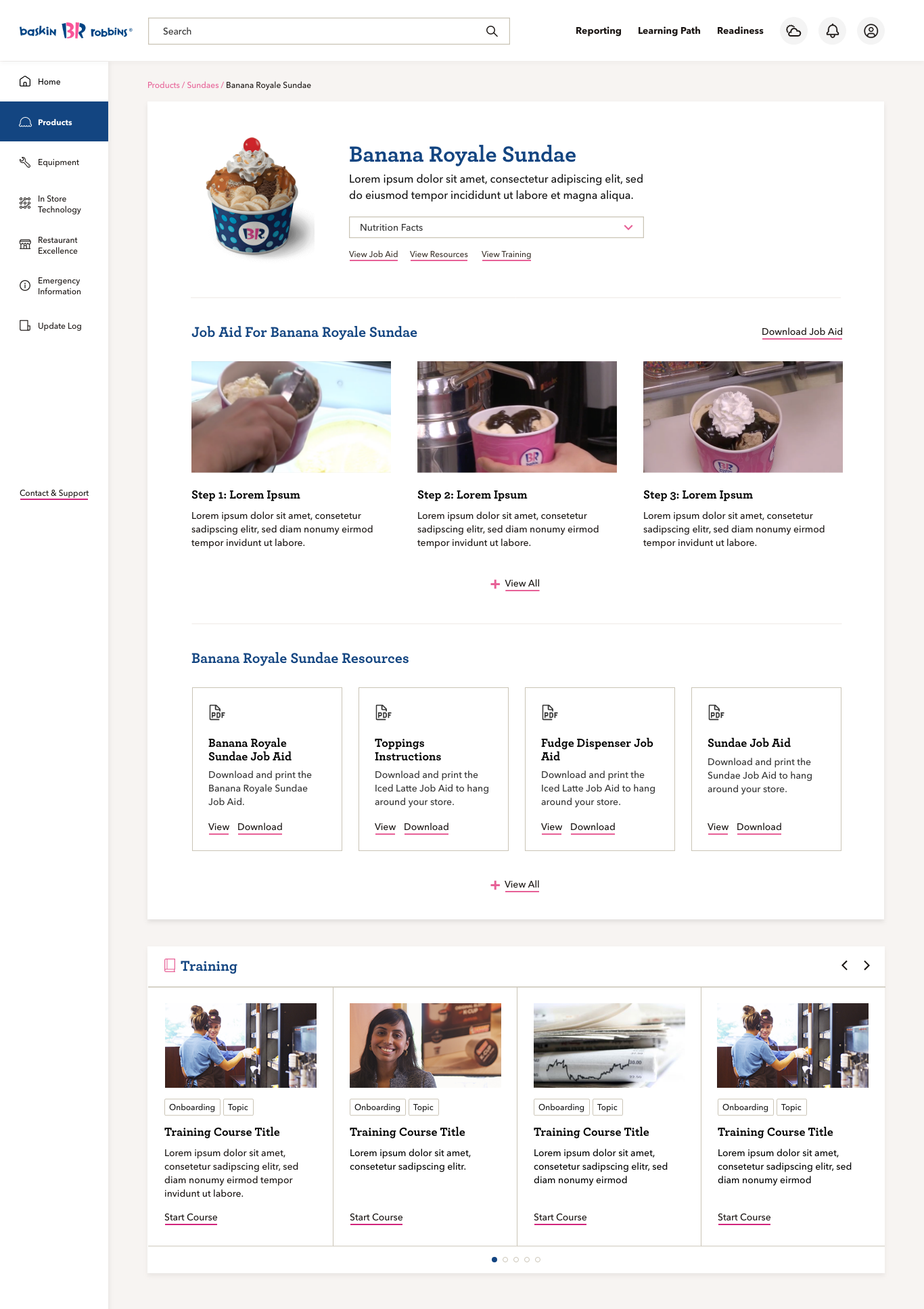
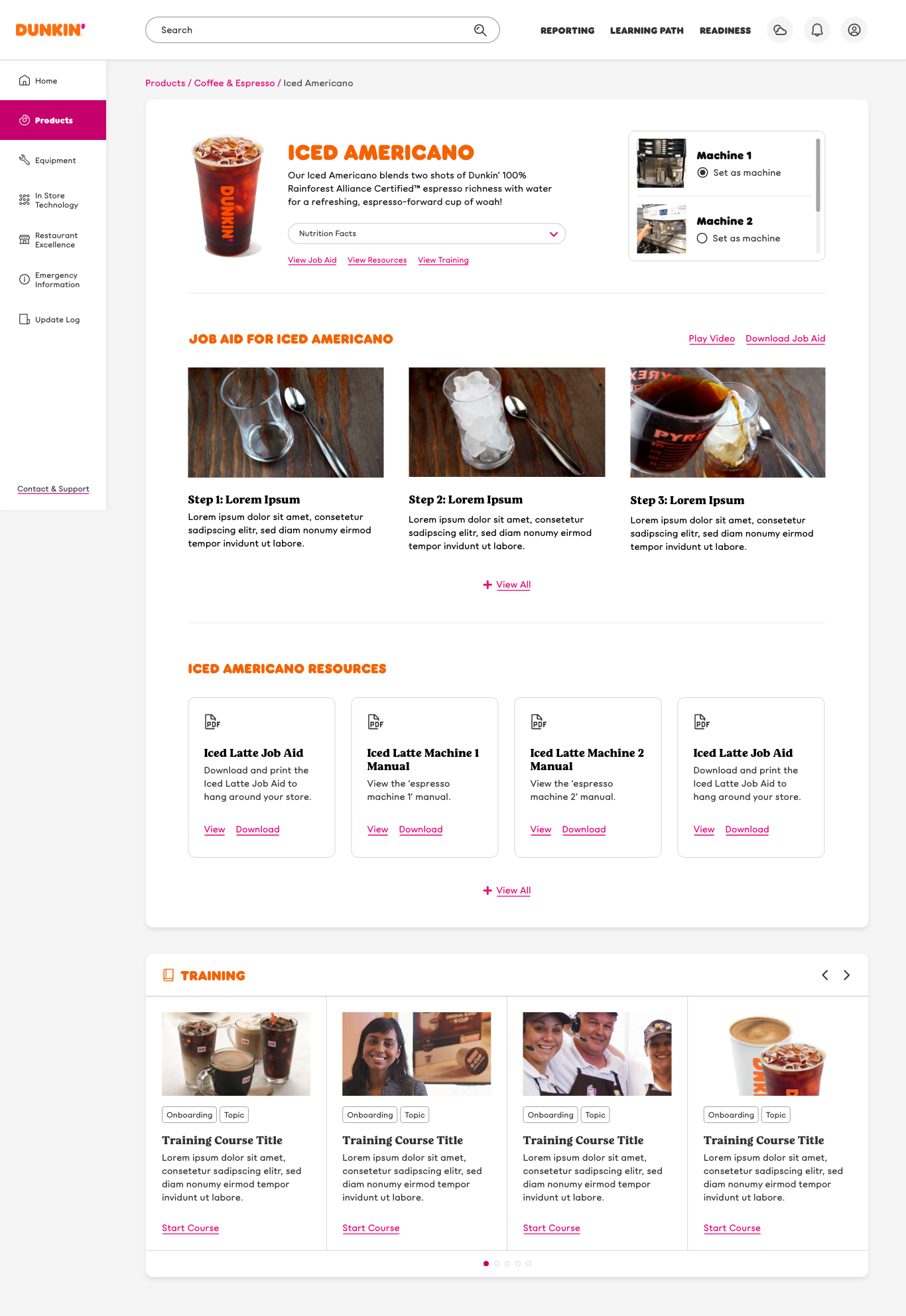
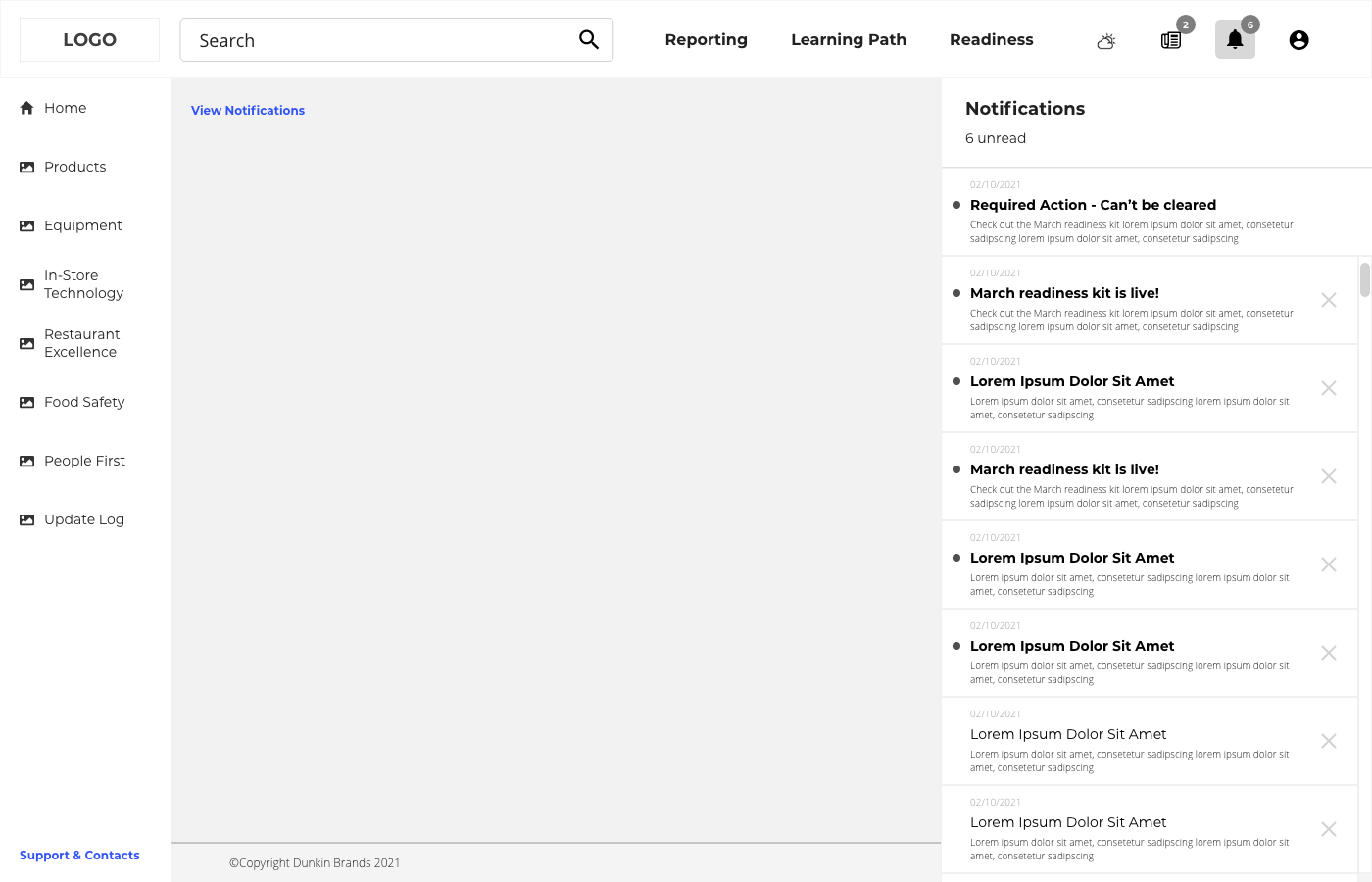
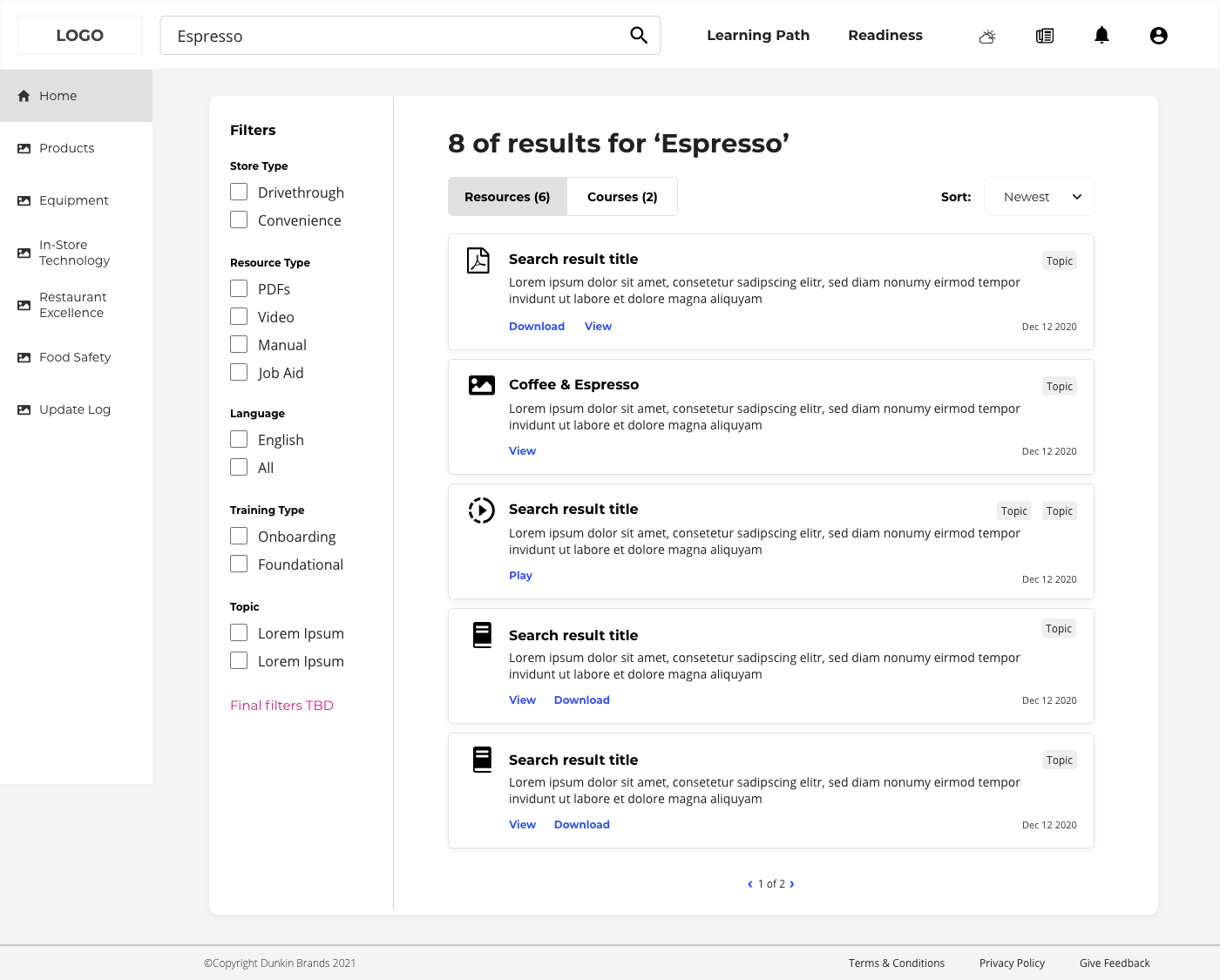
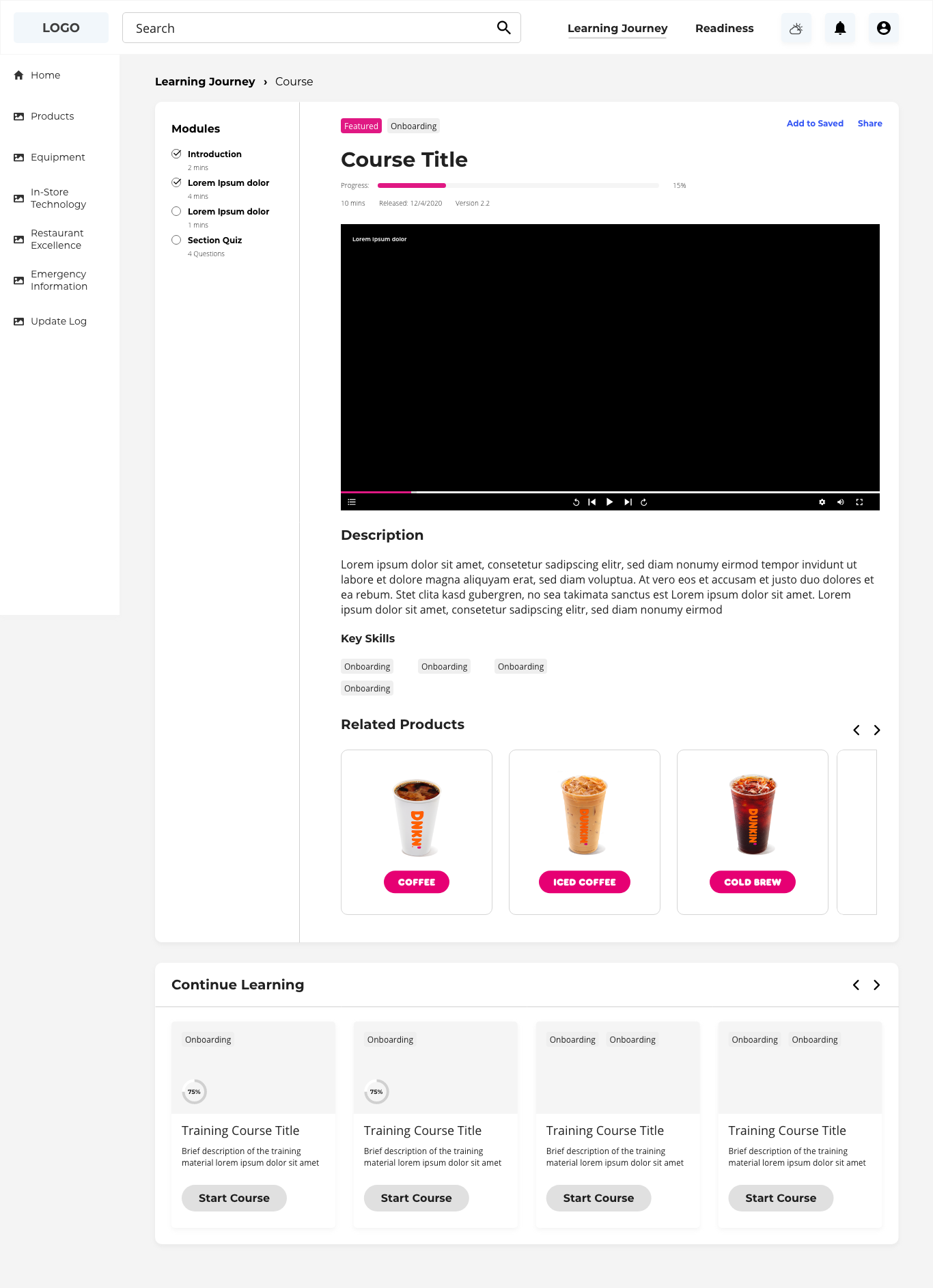
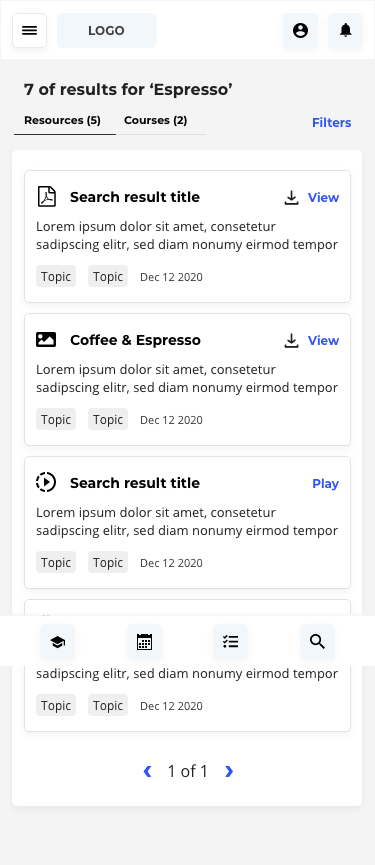
After all the discovery and synthesis work we were ready to begin designing out the Center experience. I had a junior UX designer support me in the wireframe phase and collaborated with the UI team to create the design system and high-fidelity mockups. As we wrapped up features or sections of the content we would hand them off to our UI team.
Collaboration with UI
Throughout, I work closely with the UI team to ensure that high-fidelity designs maintained the strategy and that design decisions were documented and communicated.
Working closely with architects and engineers
I also worked closely with the architects and engineers on this project. We were diligent from the beginning that all of the design work and strategy work aligned with the tech and capabilities.
Outcomes & results
Project status as I left Merkle
Where are things at now? Unfortunately, I left Merkle (before I returned for round 2) before the development of this project was completed. At the time I left we had a robust design system, all of the base templates created, and we were planning to enter rounds of testing to ensure the solution solved critical problems. I worked hard to ensure that the project was left well documented and that the team taking over had everything they would need to complete the Center.